
5 Journal Prompts to Help Creatives Figure Out What to Post on Social Media (Plus an AI Prompt for a Month of Content)
If you're like most artists, creatives, and entrepreneurs I know, you probably struggle with what to post on social media to increase engagement with your brand. I sometimes struggle with it myself. As a solopreneur, I don't have anyone to bounce marketing ideas off of.
(Except the birds and the trees. We do talk regularly.)
Sharing your finished work is important, but how you share it makes all the difference, not only in engagement numbers but also in your wallet.
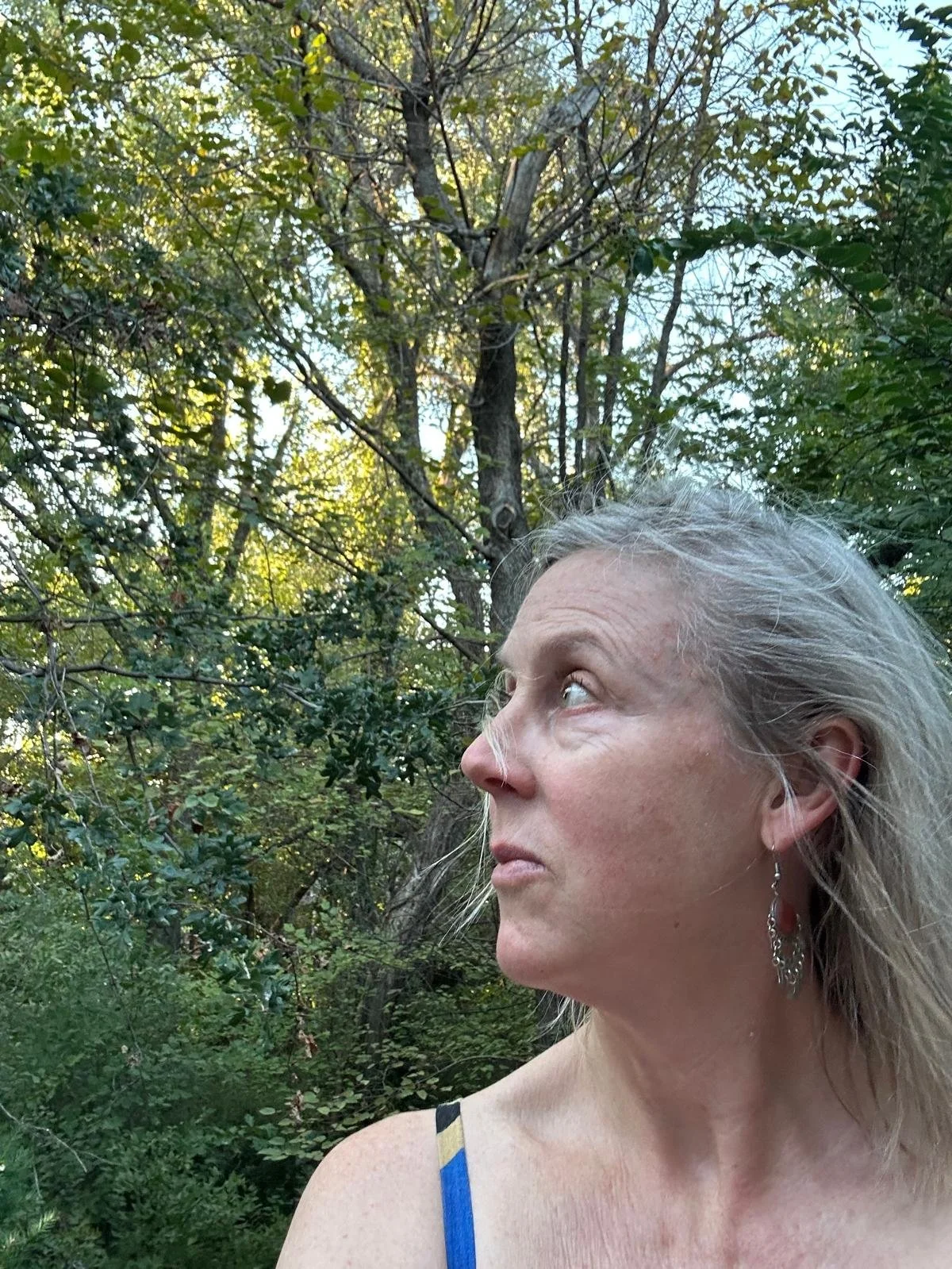
Talking to the trees.
I spend a lot of time outside listening to the birds and talking to the trees. It helps me connect within and is an important part of my creative process. What’s yours?
Luckily, there are plenty of ways to create engaging content for creatives. I've developed a strategy that draws on your unique perspective and experience as an artist, with a little help from AI for ideas. In this approach, AI is your marketing partner and you are the sole source of inspiration. AI isn't creating your content. It's a tool that works from your own words and experiences as a creative.
Your audience wants more than your finished work. They want to know your creative process, how you work, and what shapes you as a creative professional.
That's the idea behind Austin Kleon's book Show Your Work!, and it's the foundation of this post. Below are five journal prompts, one for each kind of story you can tell, based on the book, followed by an AI prompt that turns your answers into a month of content ideas.
This isn’t AI creating your content, this is using AI as a tool based on your own words and experiences as a creative.
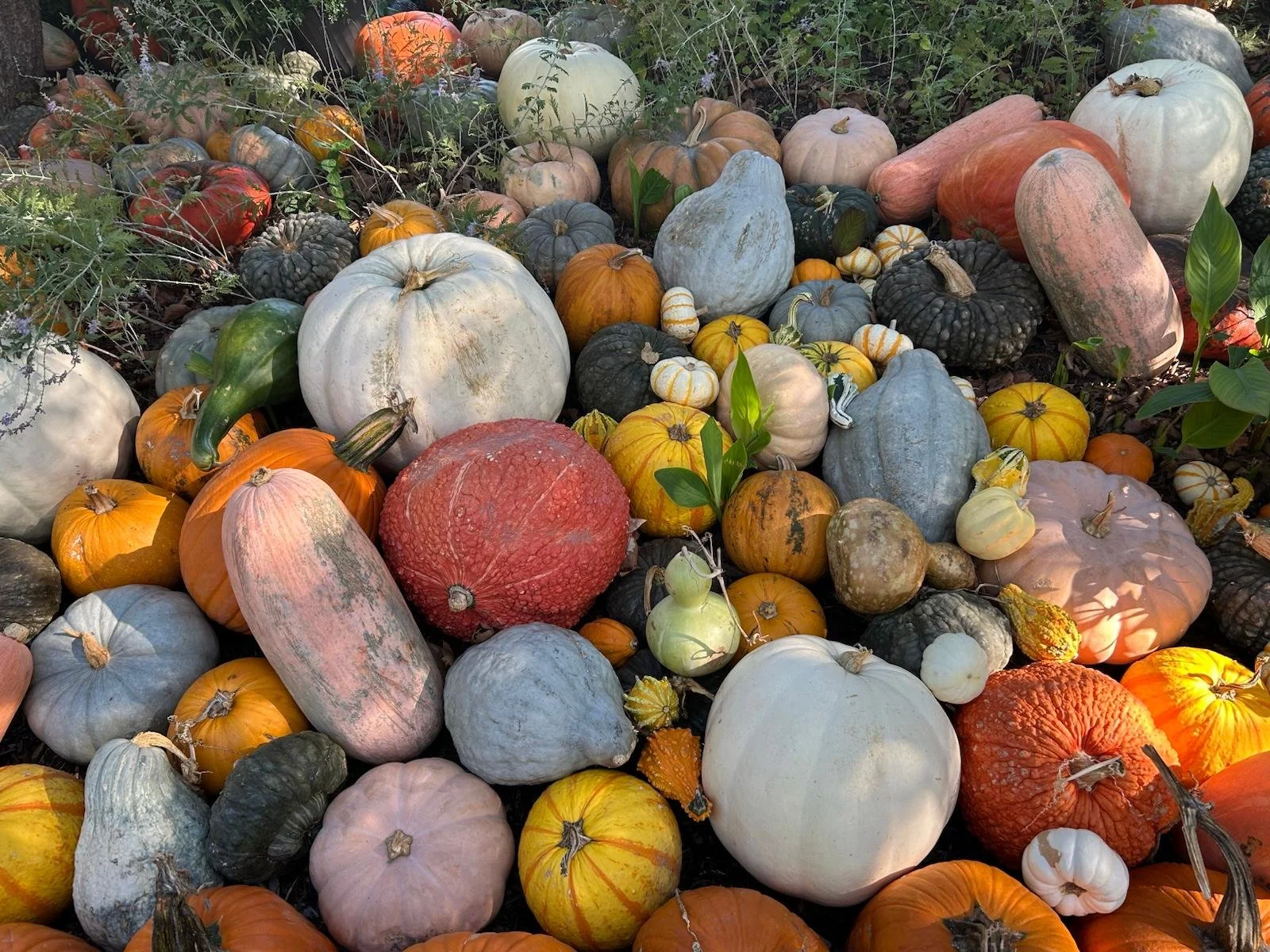
Color, shape, and textures all around me.
I look for design inspiration everywhere I go. Happy pumpkin season.
How to Use the Journal Prompts
Set a timer for 10 minutes per prompt. Don't worry about grammar or perfect answers. Try to write without pausing, as a stream-of-consciousness exercise, or record your answers on your phone if that works better for you.
Art often comes from the subconscious, so the goal is an unfiltered answer that speaks to the heart of where your art or creative endeavors came from. Don't get too cerebral. Let it flow.
Five Journal Prompts for Artists
Process prompt: Describe your creative process as if it were a ritual. What are the steps, the environment, the sounds, the rhythms that bring a piece of work into existence?
Inspiration prompt: Name three influences (people, places, or ideas) that show up in your work but aren't obvious. How do they quietly shape what you create?
Learning prompt: What belief about yourself or your art has changed the most since you began creating? How does that shift show up in your work today?
Storytelling prompt: When did you first realize that making art wasn't optional for you, that it was something you needed to do?
Sharing your work prompt: Choose a piece of work you love but rarely talk about. What is the private story that gives that piece its life?
How to Use AI to Turn Your Answers Into a Month of Content Ideas
Once you've answered all five journal prompts, you can use AI to turn your reflections into a content plan. Remove anything private before you paste, and expect some ideas to miss. The point is to start, not to accept every suggestion. You may not like all the ideas, but it's a starting place. Whatever you post has to feel like you. If it doesn't, change it or ditch it.
You also don't have to use AI to get ideas. You could look over your answers to the journal prompts and come up with your own. They might be better ideas.
Remember this: the more often you generate your own ideas based on your own experiences, the better you'll get at it. Creativity is a muscle, and it improves with use. Either way, some will be a hit and others won’t. That’s how we learn.
With all that said, here's the prompt if you want to play around with it.
AI PROMPT FOR GENERATING A MONTH OF CONTENT IDEAS:
Analyze the following reflections from an artist [substitute designer, photographer, or whatever here].
Using the ideas from Show Your Work by Austin Kleon, generate 20–30 pieces of content the artist could share online.
Organize the content across these storytelling pillars:
• creative process
• inspiration and influences
• artistic growth and learning
• personal story and motivation
• finished artwork
For each piece of content provide:
• a short idea for the post
• the angle of the story
• a suggested caption or opening sentence (THE HOOK)
The tone should feel authentic, reflective, and story-driven rather than promotional.
Content should feel natural for platforms like Instagram, newsletters, blogs, or artist websites.
Here are the artist’s reflections:
[Paste journal answers here]
That’s all for now. I hope you enjoy the process!
PS: I’ll be posting this on my Substack in a few days. I wrote a blog post all about how to post content on both your personal blog and Substack and why both are important. You can read about it here— Personal Blog Vs. Substack: How to Use Both Without Losing SEO Power.
PPS: In addition to creating beautiful and effective websites, I also offer an annual subscription for a monthly service. This includes two hours of my time each month that can be used for anything you need for your small business—website maintenance, SEO work, content creation, or consultation on branding and marketing. Contact me to inquire.
